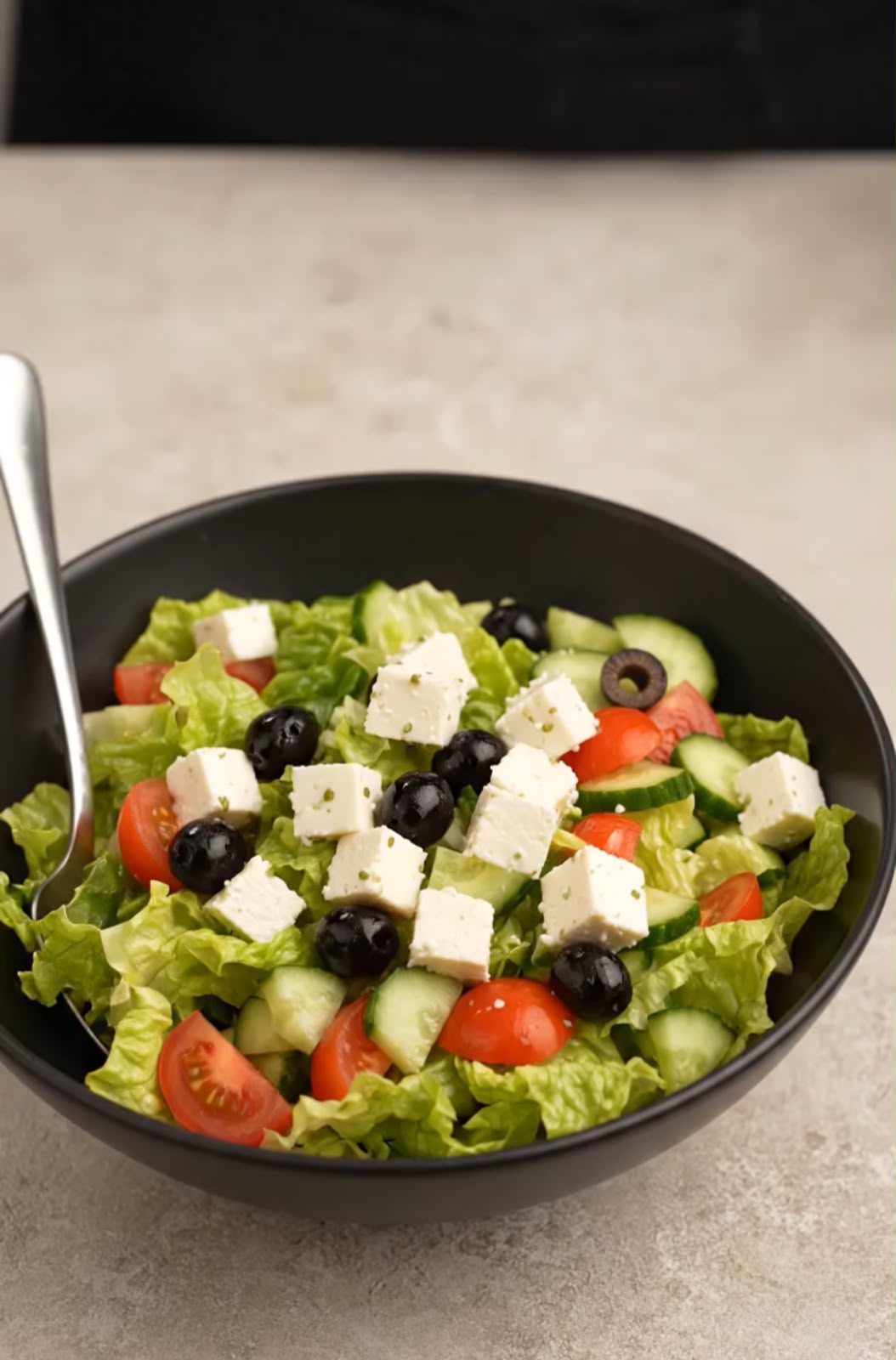

Classic Greek Salad
Description
Classic Greek Salad is a fresh, colorful Mediterranean salad featuring crisp vegetables, briny olives, creamy feta cheese, and a simple olive oil dressing. Known in Greece as Horiatiki (Village Salad), this traditional dish celebrates the natural flavors of ripe tomatoes, cucumbers, onions, and peppers without the need for heavy dressings. It is refreshing, nutritious, and perfect as a side dish, light lunch, or accompaniment to grilled meats and seafood.
Its vibrant colors, crunchy textures, and tangy flavors make it one of the world’s most beloved salads.
Servings
- Servings: 4
- Preparation Time: 15 minutes
- Cooking Time: 0 minutes
- Total Time: 15 minutes
Ingredients
For the Salad
- 4 medium ripe tomatoes, cut into wedges
- 1 large cucumber, sliced into half-moons
- 1 green bell pepper, thinly sliced
- 1 small red onion, thinly sliced
- ½ cup Kalamata olives
- 6 oz (170 g) feta cheese, cut into large cubes or one block
- 1 tablespoon chopped fresh oregano (or 1 teaspoon dried oregano)
For the Dressing
- ¼ cup extra-virgin olive oil
- 1 tablespoon red wine vinegar
- ½ teaspoon dried oregano
- ¼ teaspoon salt (adjust to taste)
- ¼ teaspoon black pepper
Instructions
Step 1: Prepare the Vegetables
- Wash and dry all vegetables thoroughly.
- Cut tomatoes into wedges.
- Slice cucumber, bell pepper, and red onion.
Step 2: Assemble the Salad
- Place tomatoes, cucumber, bell pepper, and onion in a large serving bowl.
- Add Kalamata olives.
- Gently toss to combine.
Step 3: Make the Dressing
- In a small bowl, whisk together olive oil, red wine vinegar, oregano, salt, and pepper.
- Taste and adjust seasoning if needed.
Step 4: Finish the Salad
- Pour the dressing over the vegetables.
- Toss lightly.
- Place feta cheese on top.
- Sprinkle with oregano.
Step 5: Serve
Serve immediately with crusty bread or as a side dish.
Recipe Notes
- Use ripe, flavorful tomatoes for the best results.
- Traditional Greek salad often features a large slab of feta rather than crumbled cheese.
- High-quality extra-virgin olive oil significantly enhances flavor.
- Avoid overdressing the salad.
- Serve fresh for maximum crispness.
Tips for the Best Classic Greek Salad
1. Choose Fresh Ingredients
Since the recipe is simple, ingredient quality is crucial.
2. Use Authentic Feta
Greek sheep’s milk feta offers the most traditional flavor.
3. Slice Vegetables Uniformly
Even pieces improve presentation and texture.
4. Add Dressing Just Before Serving
This keeps the vegetables crisp.
5. Don’t Overmix
Gentle tossing prevents tomatoes and feta from breaking apart.
6. Use Kalamata Olives
Their rich, fruity flavor complements the salad perfectly.
7. Chill Ingredients
Cold vegetables make the salad extra refreshing.
Nutritional Information
Approximate values per serving
| Nutrient | Amount |
|---|---|
| Calories | 240 kcal |
| Protein | 7 g |
| Carbohydrates | 10 g |
| Total Fat | 20 g |
| Saturated Fat | 6 g |
| Fiber | 3 g |
| Sugars | 6 g |
| Sodium | 520 mg |
| Potassium | 420 mg |
| Calcium | 180 mg |
| Vitamin C | 45 mg |
Health Benefits
1. Rich in Antioxidants
Tomatoes, peppers, and onions provide antioxidants that help protect cells from oxidative stress.
2. Supports Heart Health
Olive oil contains heart-friendly monounsaturated fats.
3. Good Source of Vitamins
The vegetables provide vitamins A, C, and K, along with essential minerals.
4. Contains Protein and Calcium
Feta cheese contributes protein and calcium for bone health.
5. High in Hydration
Tomatoes and cucumbers have high water content, supporting hydration.
6. Naturally Gluten-Free
The salad is naturally gluten-free when served without bread.
7. Nutrient-Dense and Satisfying
Despite being relatively low in calories, it provides a variety of important nutrients.
Variations
Traditional Greek Village Salad
Serve with a large block of feta and no lettuce.
Greek Chickpea Salad
Add 1 cup cooked chickpeas for extra protein and fiber.
Greek Pasta Salad
Mix with cooked and cooled pasta.
Greek Quinoa Salad
Add cooked quinoa for a hearty meal.
Greek Chicken Salad
Top with grilled chicken breast.
Vegan Greek Salad
Replace feta with a plant-based feta alternative.
Frequently Asked Questions (Q&A)
Q1: Can I make Greek salad ahead of time?
A: Yes, but keep the dressing separate until just before serving to maintain freshness.
Q2: What type of feta works best?
A: Authentic Greek feta made from sheep’s milk or a sheep-and-goat milk blend offers the most traditional flavor.
Q3: Can I use black olives instead of Kalamata olives?
A: Yes, though Kalamata olives provide the classic Greek flavor profile.
Q4: Should Greek salad contain lettuce?
A: Traditional Greek salad does not typically include lettuce.
Q5: How long does Greek salad last?
A: It is best eaten fresh but can be refrigerated for up to 24 hours.
Q6: Can I add other vegetables?
A: Yes. Radishes, capers, or artichoke hearts are popular additions.
Q7: Is Greek salad suitable for weight management?
A: It can be part of a balanced diet due to its vegetables, healthy fats, and moderate calorie content.
Q8: What dishes pair well with Greek salad?
A: Grilled chicken, lamb, fish, seafood, pita bread, and Mediterranean-style dishes pair exceptionally well.
Serving Suggestions
- Serve alongside grilled chicken, lamb, or fish.
- Pair with warm pita bread and hummus.
- Include as part of a Mediterranean mezze platter.
- Enjoy as a light lunch with grilled shrimp.
- Serve at picnics, barbecues, and summer gatherings.
Conclusion
Classic Greek Salad is a simple yet flavorful Mediterranean favorite that showcases fresh vegetables, creamy feta cheese, and a light olive oil dressing. Easy to prepare and packed with nutrients, this refreshing salad is perfect for everyday meals, entertaining guests, and enjoying the vibrant flavors of Mediterranean cuisine.