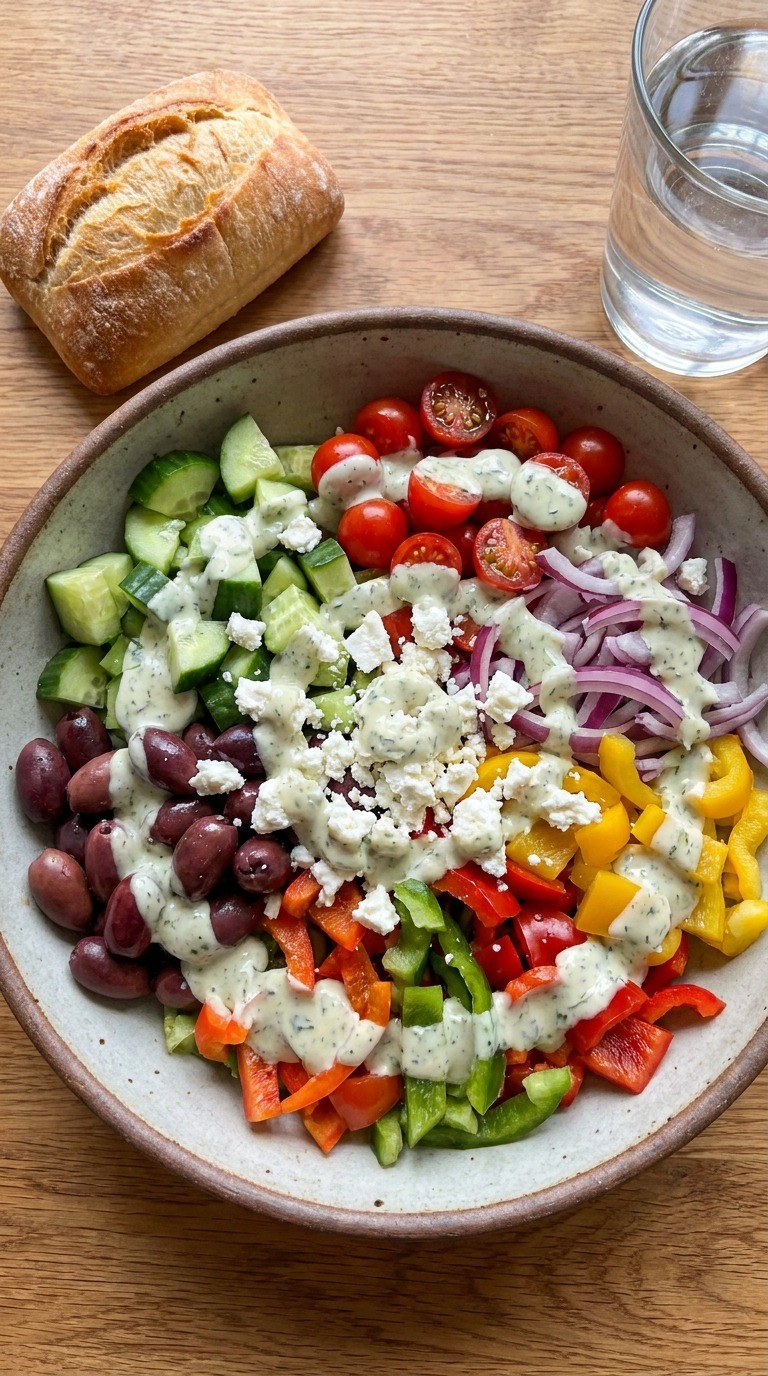

Mediterranean Greek Salad (Horiatiki Salad)
Description
Mediterranean Greek Salad, traditionally known as Horiatiki, is a fresh, rustic salad originating from Greece. It’s a vibrant combination of juicy vegetables, briny olives, and creamy feta cheese, all brought together with extra virgin olive oil and herbs. Unlike many modern salads, it contains no lettuce—just bold, simple, high-quality ingredients.
Ingredients (Serves 4)
- 3 large ripe tomatoes (cut into wedges)
- 1 cucumber (sliced thick or half-moons)
- 1 green bell pepper (sliced)
- 1 small red onion (thinly sliced)
- 150–200 g feta cheese (block, not crumbled)
- ½ cup Kalamata olives
- 3–4 tbsp extra virgin olive oil
- 1 tbsp red wine vinegar (optional)
- 1 tsp dried oregano
- Salt (to taste)
- Fresh cracked black pepper (optional)
Instructions
- Prepare vegetables
- Wash and chop tomatoes, cucumber, bell pepper, and onion into rustic pieces.
- Assemble salad base
- Add all vegetables to a large serving bowl.
- Add olives
- Scatter Kalamata olives evenly over the salad.
- Top with feta
- Place a whole slab or thick block of feta cheese on top (traditional style).
- Season
- Drizzle olive oil generously.
- Add vinegar (optional but common in modern versions).
- Sprinkle oregano, salt, and pepper.
- Serve
- Do not toss aggressively—serve as a rustic layered salad.
Notes
- Authentic Greek salad is not mixed heavily; ingredients are meant to stay visually distinct.
- Feta is traditionally added in a block, not crumbled.
- High-quality olive oil is essential for flavor.
- No lettuce is used in the classic version.
Tips
- Use vine-ripened tomatoes for best sweetness.
- Chill vegetables before assembling for a refreshing taste.
- Add capers for extra Mediterranean tang.
- Let the salad sit for 5–10 minutes before serving to enhance flavor absorption.
Servings
- Serves 4 people as a side dish
- Serves 2 people as a main light meal
Approximate Nutritional Info (per serving)
- Calories: 220–300 kcal
- Protein: 6–9 g
- Carbohydrates: 10–14 g
- Fat: 18–25 g
- Fiber: 3–5 g
- Sodium: Moderate (higher if olives/feta are salty)
(Values vary based on feta and olive oil quantity.)
Health Benefits
- Heart health support: Olive oil provides healthy monounsaturated fats.
- Rich in antioxidants: Tomatoes and bell peppers contain vitamin C and lycopene.
- Gut-friendly: Fresh vegetables aid digestion and fiber intake.
- Bone health: Feta cheese provides calcium and protein.
- Anti-inflammatory properties: Oregano and olive oil contribute beneficial plant compounds.
Q&A
Q1: Can I add lettuce to Greek salad?
No. Traditional Greek salad does not include lettuce. Adding it turns it into a different style salad.
Q2: What can I use instead of feta cheese?
You can use goat cheese or dairy-free feta alternatives, but flavor will differ from the authentic version.
Q3: Can I make it ahead of time?
You can chop vegetables ahead, but assemble and season just before serving to avoid excess moisture.
Q4: Is Greek salad healthy for weight loss?
Yes. It’s low in calories, nutrient-dense, and high in fiber, making it suitable for balanced diets.
Q5: What makes it “Mediterranean”?
The use of olive oil, fresh vegetables, olives, and feta reflects core Mediterranean diet principles.